

Rank and Rent SEO: The Complete Guide to Building Digital Real Estate
Last updated: June 27, 2026
I have been building, ranking, and renting websites for years — in Zimbabwe and internationally. This is the definitive guide to the rank and rent business model, written by someone who actually does it.
Updated: 22 May 2026
Guide to the Rank and Rent Process
The concept of real estate investing is simple: you buy a property, find a tenant, and collect monthly rent. But physical real estate requires significant capital, credit checks, and maintenance headaches.
In the digital world, there is a parallel business model that offers similar cash flow benefits without the high barrier to entry. It is called rank and rent — and it is exactly what I do through my website rental portfolio here at CDR.
Rank and rent is a lead generation strategy where you build a website, use SEO to rank it at the top of Google for specific local service keywords, and then "rent" the resulting leads or the website itself to a local business owner. Instead of owning a physical apartment building, you own digital real estate that valuable customers visit every day. If you are curious about what a professional website build looks like and how much a website costs in Zimbabwe, I have written a detailed breakdown.
I have been doing this for years — building niche websites, ranking them on Google, and renting them to businesses who need customers. This guide covers everything you need to know about the rank and rent process, from selecting a niche to closing your first deal. This is not theory from someone who read about it online. This is what I do.
What is the Rank and Rent Business Model?
At its core, the rank and rent business model is about ownership and control. In a traditional client SEO agency model, you work on a client's website. If they stop paying you, they keep the website and the rankings you built. You are trading time for money.
In the rank and rent model, you own the asset. You build a generic website (e.g., "PestControlBulawayo.com" rather than "Bob's Bug Busters"). You control the domain, the content, and the tracking phone number. If a tenant stops paying, you simply redirect the phone number and contact form to a different business in the area. The asset remains yours.
This is exactly how I operate my website rentals here in Zimbabwe. I build the sites, I rank them, and I rent them out. The business owner gets leads from day one without waiting months for SEO to kick in, and I keep ownership of the digital asset.
How It Differs from Affiliate Marketing
Many entrepreneurs confuse rank and rent with affiliate marketing. In affiliate marketing, you usually rank for national or global terms (like "best running shoes") and earn a small commission on a sale. The competition is fierce because you are fighting against massive publishers.
Rank and rent focuses on local lead generation. You are competing against local businesses in a specific city, many of whom have poorly optimised websites — or no website at all. It is significantly easier to rank for "pest control Bulawayo" than it is to rank for "best pest control products."
How It Differs from Client SEO
With client SEO, you optimise someone else's website. If the relationship ends, you walk away with nothing — they keep the rankings, the domain, and all the content you built. With rank and rent, every hour you invest goes into an asset you own. I have experienced both sides of this, and I can tell you that owning the asset changes everything about your leverage and your income stability.
Real Example: How I Rank and Rent Websites in Zimbabwe
Let me show you exactly how this works in practice. I currently operate a portfolio of rank-and-rent websites through CDR, targeting specific service niches across Zimbabwe. These are not hypothetical examples — these are live, ranking websites in my portfolio right now.
Proof: Page 1 on Google
Here is a screenshot from a live Google search for "pest control Bulawayo" — you can see PestControlBulawayo.com ranking on Google's first page of organic results. This is the kind of visibility that drives real leads every single day.
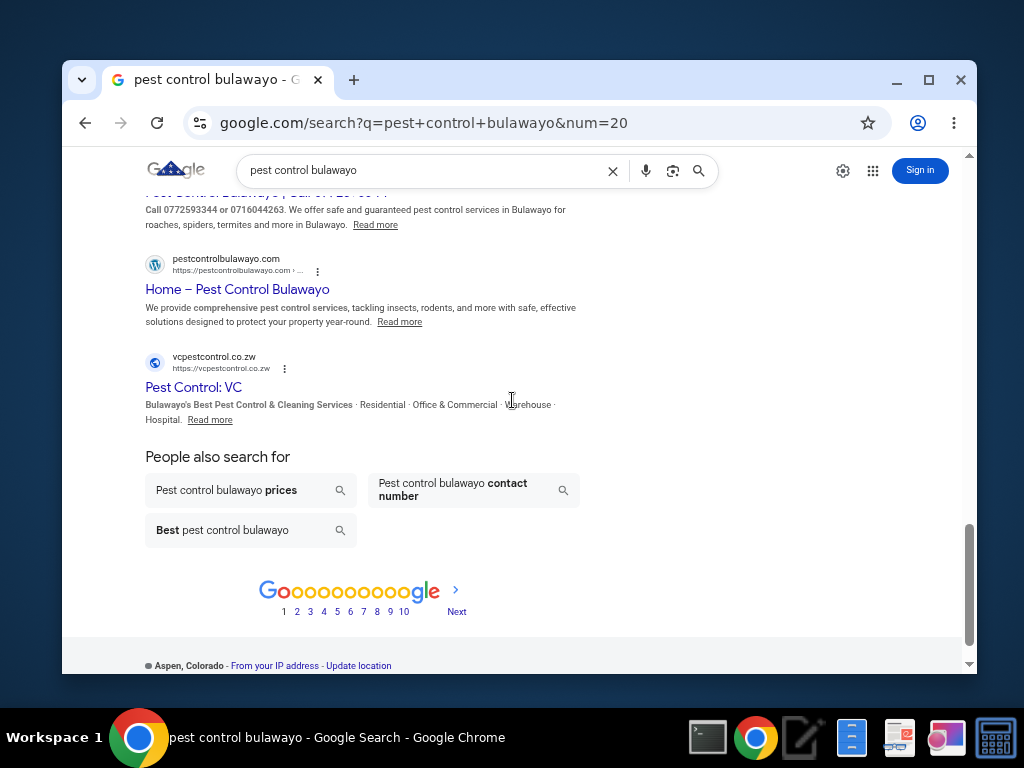
Live Google search result — PestControlBulawayo.com ranking on page 1 for "pest control Bulawayo"
PestControlBulawayo.com
I built this site from scratch, optimised it for keywords like "pest control Bulawayo" and "fumigation services Bulawayo," and it now ranks on Google's first page. A local pest control company rents this site — they get the calls, enquiries and leads, and I collect a monthly rental fee. If they ever stop paying, I simply redirect the leads to a competitor. The site stays mine.
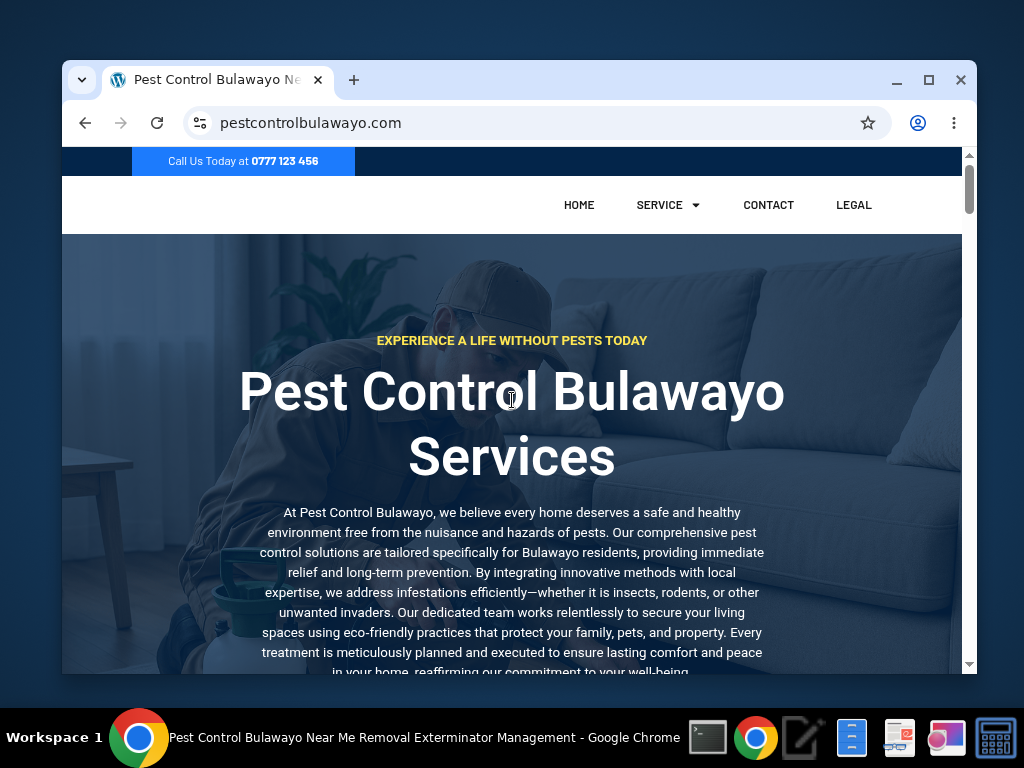
PestControlBulawayo.com — a live rank-and-rent site in my portfolio
WeddingPlannerBulawayo.co.zw
Same model, different niche. This site targets wedding-related searches in Bulawayo. It is the perfect marketing tool for anyone in the wedding industry — planners, venues, caterers. The site is built, it is ranking, and it is available for rent to any business that wants instant visibility in that market.
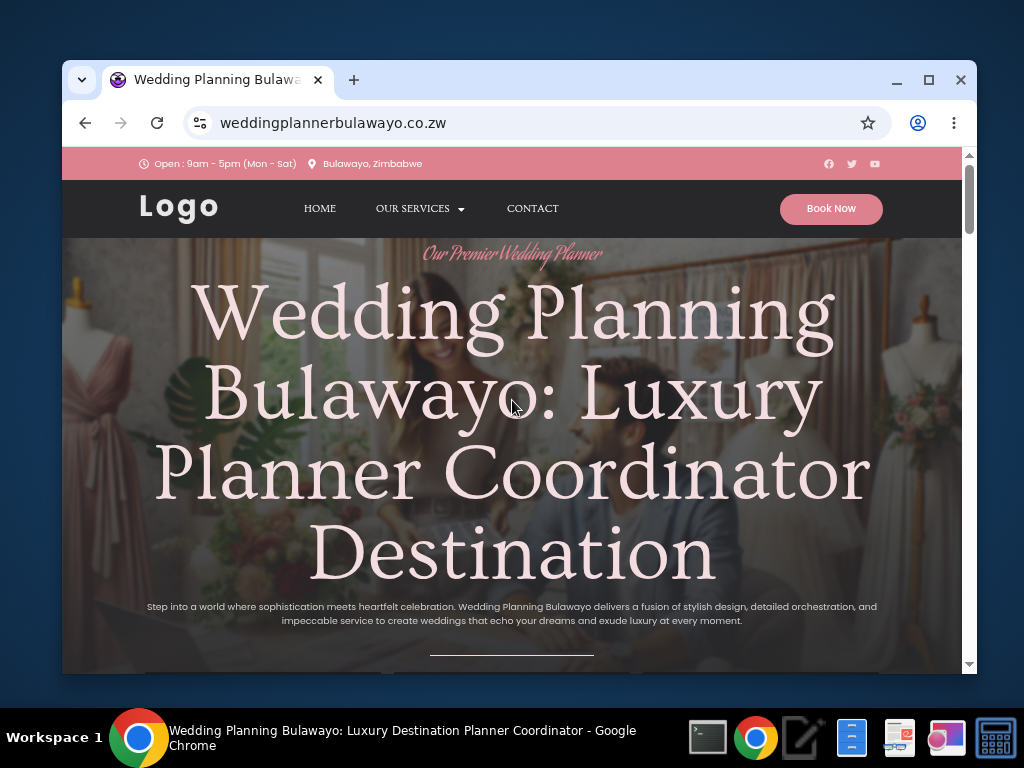
WeddingPlannerBulawayo.co.zw — targeting wedding searches in Bulawayo
These are live websites in my portfolio right now. You can see the full list on my website rentals page.
The Rank and Rent Process: A Step-by-Step Guide
Building a successful rank and rent business requires a systematic approach. You cannot guess your way to success. Here is the proven workflow I follow every time I build a new rental site.
Step 1: Niche and City Selection
This is the most critical phase. If you choose the wrong market, no amount of SEO wizardry will save you. You are looking for the "sweet spot": high enough search volume to generate leads, but low enough competition to rank quickly.
Criteria for a Good Niche:
- High Ticket Value — Choose services where one job is worth a lot of money to the business owner. Roofers, tree service, concrete, fencing, pest control, and pool installation are great examples. A $50 lead is easy to sell if the job is worth $10,000.
- Urgency — Services that people need immediately (like emergency plumbing, pest infestations, or towing) often convert better than luxury services that require months of research.
- Phone-Driven — You want niches where customers pick up the phone to call. This makes tracking and proving value much easier. In Zimbabwe, this is especially important as many people prefer calling over filling in online forms.
Criteria for a Good City:
- Population — Aim for cities with populations between 50,000 and 250,000. Major metropolitan areas are often too competitive for beginners. In Zimbabwe, cities like Bulawayo, Mutare, Gweru, and Masvingo are perfect — large enough to have search volume, but small enough that the competition is weak.
- Competition Analysis — Look at the current Page 1 results. Are they all strong, authoritative brands? Or do you see Yelp pages, Facebook pages, and outdated websites? Weak competition is a green light.
- Business Density — Make sure there are enough businesses in that niche to find a tenant. If there is only one plumber in a small town, you have no leverage.
Step 2: Keyword Research
Once you have a niche and city, you need to identify what people are actually typing into Google. Your primary keyword will usually follow the format: (Service) + (City). For example, if you choose pest control in Bulawayo, your keywords might look like:
- Pest control Bulawayo
- Fumigation services Bulawayo
- Termite treatment Bulawayo
- Pest exterminator near me
Use tools like Ahrefs, SEMrush, or even the free Google Keyword Planner to verify that people are searching for these terms. You do not need massive volume; even 50 to 100 searches a month can result in a highly profitable rank and rent website if the conversion rate is high.
I also recommend checking Google Trends to see if your niche has seasonal patterns. Pest control, for example, spikes during the rainy season in Zimbabwe — which means you can charge more during peak months.
Best Niches for Rank and Rent in 2026
Not all niches are created equal. After building multiple rank-and-rent sites, these are the niches I recommend based on lead value, ease of ranking, and tenant willingness to pay:
| Niche | Avg. Lead Value | Competition | Monthly Rental Potential |
|---|---|---|---|
| Roofing | $80–$150/lead | Medium | $750–$1,500 |
| Pest Control | $25–$60/lead | Low–Medium | $300–$700 |
| Plumbing | $40–$80/lead | Medium | $500–$1,000 |
| Tree Service | $50–$100/lead | Low | $500–$1,000 |
| Wedding Services | $30–$75/lead | Low | $300–$600 |
| Fencing & Concrete | $60–$120/lead | Low | $500–$900 |
| HVAC / Air Conditioning | $50–$100/lead | Medium | $600–$1,200 |
| Legal Services | $100–$300/lead | High | $1,000–$2,500 |
In Zimbabwe specifically, I have found pest control and wedding services to be excellent starting niches. The competition is very low, business owners are hungry for leads, and you can rank a well-built site within weeks rather than months.
Step 3: Building the Rank and Rent Website
You do not need to be a master developer to build these sites. Speed and functionality are more important than winning design awards. WordPress is generally the best platform for rank and rent SEO because of its flexibility and plugin ecosystem. If you need a professional build, that is exactly what I offer through my web design service. If you are based in the capital, check out my guide on web design in Harare for location-specific pricing and packages. You can also explore some of the best business websites in Zimbabwe for design inspiration.
Key Elements of the Site:
- Domain Name — Choose a partial match domain (PMD) or exact match domain (EMD) if possible.
PestControlBulawayo.comtells Google exactly what the site is about. I own several of these keyword-rich domains across different niches. - Content — You need authoritative content. Write service pages for every specific service (e.g., fumigation, termite treatment, rodent control). Each page targets a different keyword cluster.
- Call to Action (CTA) — The phone number should be big, bold, and visible on mobile devices. The goal is to generate a call, not just a page view. In my experience, a prominent click-to-call button above the fold increases conversions by 30–40%.
- Google Business Profile — If you can set up a verified Google Business Profile for the site, your chances of ranking in the Map Pack increase dramatically. More on this below.
- Speed and Mobile — Google prioritises fast, mobile-friendly websites. Every rank-and-rent site I build scores 90+ on Google PageSpeed Insights. If your site is slow, you are leaving rankings on the table.
Step 4: On-Page and Off-Page SEO
Now you must get the site to the top of Google. This is where my 15+ years of SEO experience really pays off. If you are looking for professional help with this step, I have written a guide on how to choose an SEO company in Zimbabwe that covers exactly what to look for and what to avoid.
- On-Page SEO — Ensure your title tags, headers (H1, H2), and meta descriptions include your target keywords. Ensure your NAP (Name, Address, Phone Number) is consistent across the site. Add schema markup for local business.
- Off-Page SEO (Backlinks) — This is the fuel for your rankings. You need other websites to link to yours. Quality matters far more than quantity.
- Citations — Register your business on directories like Yelp, YellowPages, and local business listings. In Zimbabwe, get listed on directories like ZimPages and local chamber of commerce sites.
- Guest Posts — Write articles for other industry blogs and link back to your site. One strong guest post is worth more than 50 directory links.
- Local Relevance — Try to get links from other websites in the same city or region. A link from a local church, school, or community blog is incredibly powerful for local SEO.
Step 5: Tracking and Lead Capture
Before you ever talk to a potential tenant, you must know exactly how many leads you are generating. Never rely on the business owner to tell you how many calls came from your site — they will always undercount.
Use call tracking software (like CallRail, Twilio, or WhatConverts). This allows you to put a unique phone number on your website that forwards to the business owner. You can record the calls, see the caller ID, and prove exactly how much value you are delivering.
I also recommend setting up Google Analytics and Google Search Console on every rank-and-rent site. This gives you data on which keywords are driving traffic, how many impressions you are getting, and where your site sits in search results. When you sit down with a potential tenant, this data is your sales pitch.
Step 6: Finding and Pitching Tenants
Once the site is ranking and the phone is ringing, it is time to find a partner. Here is how I approach it:
- Send Free Leads First — Before asking for money, forward a few leads to a local business for free. Let them see the quality. Once they close a job worth thousands from your leads, the conversation about payment becomes very easy.
- Cold Email/Call Script — Keep it simple: "Hi [Name], I run a website that currently generates [X] enquiries per month for [service] in [city]. I would like to send those leads your way. Can we have a 5-minute chat about how it works?"
- Show the Data — Open Google Search Console, show them the impressions and clicks. Show them the call tracking dashboard. Numbers close deals.
- Start with One Month Free — I often give the first month free as a trial. By the end of month one, they are hooked because they have seen the leads and the revenue.
Pricing Models:
| Model | How It Works | Best For |
|---|---|---|
| Flat Fee | Tenant pays a fixed amount per month (e.g., $500/month) | Most stable passive income — my preferred model |
| Pay Per Lead | Tenant pays for every qualified lead (e.g., $50 per call) | More lucrative but requires more tracking |
| Commission | You take a percentage of closed jobs | High-trust partnerships only |
| Hybrid | Small base fee + bonus per lead above a threshold | Balances stability with upside |
Tools You Need for Rank and Rent
You do not need every tool under the sun, but these are the ones I use and recommend:
| Tool | Purpose | Cost |
|---|---|---|
| Ahrefs / SEMrush | Keyword research, backlink analysis, competition auditing | $99–$199/month |
| Google Keyword Planner | Free keyword volume data | Free |
| Google Search Console | Track rankings, impressions, clicks | Free |
| Google Analytics | Traffic analysis, user behaviour | Free |
| CallRail / WhatConverts | Call tracking — prove lead volume to tenants | $45–$85/month |
| WordPress + Starter Theme | Build the website quickly | Free – $59 one-time |
| Rank Math / Yoast SEO | On-page SEO plugin for WordPress | Free – $99/year |
| Chameleon Overlay | Show a tenant's branding on your ranking site without touching the SEO | Free public beta |
One of those tools solves a headache every operator hits eventually. Once a site ranks and you sign a tenant, they usually want their own name, logo and details on the page. Rebuild it or redirect it and you gamble with the rankings you fought so hard to win. I built Chameleon Overlay to fix exactly that. It is a WordPress plugin that shows visitors the tenant's branded content while Google still sees and indexes your original ranking page. No iframes, no redirects, no wobble in your positions. You run every property from one dashboard and watch the leads come in live, which is the same data that justifies the rent when you sit down with a tenant. It is in public beta now if you want to try it on a live site.
Rank and Rent vs Client SEO vs Affiliate Marketing
Here is a side-by-side comparison to help you understand why I chose the rank and rent path:
| Factor | Rank & Rent | Client SEO | Affiliate Marketing |
|---|---|---|---|
| You own the asset | ✓ Yes | ✗ No | ✓ Yes |
| Recurring income | ✓ Monthly rent | ✓ Monthly retainer | ✗ Per sale |
| Competition level | Low (local) | Low (local) | Very high (global) |
| Client dependency | ✓ Low — replace tenants | ✗ High — lose client = lose all | Medium |
| Startup cost | $20–$50/month | $0 (work on client sites) | $10–$30/month |
| Scalability | ✓ Excellent | Limited by time | ✓ Excellent |
| Passive after setup | ✓ Mostly yes | ✗ Ongoing work | ✓ Mostly yes |
Why Rank and Rent is a Superior Business Model
For the digital entrepreneur, the rank and rent business offers specific advantages over other online income streams.
Asset Ownership
You own the digital real estate. If a client cancels, you do not lose your income stream permanently; you just lose a tenant. You can replace the tenant usually within days because you already have the leverage — the leads are already coming in. I have had tenants leave and been able to replace them within a week because the site was still generating calls.
Scalability
Once a site is ranked and rented, it requires very little maintenance. It becomes a mostly passive income stream. This allows you to rinse and repeat the process. You can build ten sites in ten different cities, or dominate one specific niche across the entire country. My goal is to have a portfolio of rental sites covering every major service niche in Zimbabwe's key cities.
High Margins
The costs to run a rank and rent website are minimal — hosting, domain renewal, and call tracking might cost $30 to $50 a month. If that site rents for $750 a month, your profit margins are exceptionally high compared to e-commerce or dropshipping, where product costs eat into profits.
Exit Value
Unlike client SEO where your only "asset" is your client list, rank-and-rent sites are sellable. A site generating $500/month in rental income can sell for $15,000–$20,000 on marketplaces like Empire Flippers or Motion Invest (typically 30–40x monthly profit). Your portfolio has real, calculable value.
Common Challenges and Mistakes
While the concept is straightforward, execution can be tricky. Here are common pitfalls I have seen (and some I have made myself) that you need to avoid.
The "Google Map Pack" Hurdle
Ranking in the organic search results (the blue links) is great, but for local services, the Google Map Pack (the map with three business listings) gets the most clicks. To rank in the Map Pack, you need a Google Business Profile (GBP).
Verifying a GBP requires a physical address in that city. Since you likely do not live in the city where you are ranking, this presents a hurdle. Some entrepreneurs partner with the business owner immediately to use their address, while others use creative methods. Be aware that Google is strict about address verification, and this is often the hardest part of the process.
Choosing Low-Value Niches
Ranking a website for "house cleaning" is often just as hard as ranking for "roofing," but the economics are different. A house cleaner might only make $100 profit per job, meaning they cannot afford to pay you much for a lead. A roofer makes thousands. Always do the math on the business owner's margins before you build the site.
Impatience
SEO is not instant. It can take 3 to 6 months (or longer) for a brand-new website to move out of the "Google Sandbox" and reach Page 1. Many beginners quit in month two, right before the results start to show. You must have the patience to see the investment through.
Building Too Many Sites at Once
A common beginner mistake is building 10 sites simultaneously and doing a mediocre job on all of them. Focus on one or two sites first. Rank them, rent them, prove the model works, and then scale. One site generating $500/month is worth far more than ten sites generating nothing.
Neglecting Content Quality
Some rank-and-rent builders throw up a five-page site with thin, generic content and wonder why it does not rank. Google rewards depth and expertise. Write service pages that genuinely help the reader understand the service. If you are writing about pest control, explain the different types of pests, treatment methods, and pricing expectations. The more useful your content, the better it ranks.
Key Takeaways
- ✓Ownership is Key — Unlike client SEO, you own the asset. You are the landlord of your digital property.
- ✓Local over Global — Focus on local service keywords where competition is lower and intent is higher.
- ✓Niche Selection Matters — Choose high-ticket services in mid-sized cities for the best chance of success.
- ✓Track Everything — Use call tracking software to prove your value to tenants.
- ✓Prove Before You Pitch — Send free leads first. Let the results sell for you.
- ✓Scalability — Once a site is rented, it requires minimal maintenance, allowing you to build more assets.
- ✓Exit Strategy — Your portfolio has real value and can be sold for 30–40× monthly profit.
Rank and Rent FAQs
Is rank and rent legal?
Yes, rank and rent is completely legal in every jurisdiction I have operated in, including Zimbabwe, South Africa, the UK, and the US. You are acting as a lead generation agency or media company. You own a media asset — the website — and you are selling the advertising space or the leads it produces to a local business. It is no different conceptually than a billboard owner renting space to a local plumber, or a newspaper selling advertising to local shops. You are not impersonating another business; you are providing a marketing service. The business owner receiving the leads is the one who fulfils the service. There is no licensing requirement for owning a website and forwarding enquiries. That said, always ensure the website content is truthful and does not make misleading claims about the tenant's qualifications or certifications. Transparency is key to a sustainable rank-and-rent business.
How much does it cost to start a rank and rent business?
The financial barrier to entry is remarkably low compared to most businesses. You need a domain name (approximately $10 per year for a .com or around $5 for a .co.zw), web hosting (around $10 per month for shared hosting, though I recommend a VPS at $20–$30/month for speed), and a call tracking number (roughly $5–$15 per month depending on the provider). You can write the content yourself to save money, or hire a freelance writer for $50–$150 per article. In Zimbabwe, you might also want a local phone number which is very affordable. Realistically, budget $50–$100 to get your first site live and functional. The real investment is your time — learning SEO fundamentals, keyword research, and link building takes weeks of study and practice. However, that knowledge compounds over every site you build afterwards. By your third or fourth site, you can have a new rank-and-rent property live in a single weekend.
How long does it take to rank a website?
This varies significantly based on the competition in your chosen city and niche. In a low-competition area — like most Zimbabwean cities including Bulawayo, Mutare, Gweru, and Masvingo — you might see page-one rankings in as little as 4 to 8 weeks, especially if you choose a keyword-rich exact match domain. I have personally ranked PestControlBulawayo.com on Google's first page within this timeframe. In more competitive markets like Johannesburg, London, or major US cities, it can take 6 to 12 months or even longer. The primary drivers of ranking speed are: the quality and quantity of backlinks you build, the depth and relevance of your on-page content, your site's technical SEO (speed, mobile-friendliness, schema markup), and the existing competition landscape. Brand-new domains also face a "Google Sandbox" period where Google is cautious about trusting new sites — this typically lasts 2 to 4 months. Patience and consistent effort during this period is what separates successful rank-and-rent operators from those who give up too early.
Do I need to live in the city I am targeting?
No, and this is one of the greatest advantages of the rank-and-rent model — it is completely location-independent. I am based in Bulawayo but could rank and rent websites in Harare, Victoria Falls, Johannesburg, London, or any city in the world. The internet does not care where you sit when you build a website. What matters is that your website content reflects genuine local knowledge — mentioning specific suburbs, landmarks, local pricing expectations, and area-specific service details. This is what convinces both Google and visitors that your site is a legitimate local resource. You can research this information online, or partner with someone in the target city. For the Google Business Profile (which helps with Map Pack rankings), you will need a physical address in the target city — this is where partnering with your eventual tenant or a local contact becomes important. Many operators start by targeting their own city first, proving the model works, and then expanding to other locations once they have the process down.
What happens if the tenant stops paying?
This is where the rank-and-rent model truly shines compared to client SEO. If a tenant stops paying, you simply log into your call tracking software and forward the phone number to a different business in the same city and niche. You change the email destination for contact forms. You update the business name on the site if needed. The leads keep flowing — they just go to a new partner. Because you own the domain, the content, the rankings, and the tracking numbers, you have all the leverage. I have been through this situation myself, and it typically takes less than a week to find a replacement tenant. Why? Because when you approach a competitor and say "I have a website that is already generating 20–30 calls per month for your exact service in your city — would you like those leads?" the answer is almost always yes. Your ranked website is a proven asset with demonstrable value, so finding a new tenant is far easier than finding the first one was.
Can I sell a rank and rent website?
Absolutely, and this is an often-overlooked advantage of the business model. Rank-and-rent websites are cash-flowing digital assets, and there is a thriving marketplace for buying and selling them. Once a site has a documented history of consistent revenue — ideally 6 to 12 months of rental income records — it becomes very attractive to investors. Marketplaces like Empire Flippers, Motion Invest, and Flippa specialise in these transactions. Rank-and-rent sites typically sell for a multiple of their monthly profit, often between 30× and 40× monthly earnings. So a site that nets $500 per month in rental income (after hosting and tracking costs) could sell for $15,000 to $20,000. Some premium sites in high-value niches like legal services or HVAC have sold for even more. This means you can build a portfolio, collect rental income for a few years, and then sell the entire portfolio for a significant lump sum — essentially cashing in your digital real estate investment, just like selling a rental property.
How many rank and rent sites should I build?
Start with one. This is the advice I give every single person who asks me this question, and it is the advice I wish someone had given me earlier. Get your first site ranked, get it rented, prove the model works in your chosen market, and learn the entire process end-to-end. Building one site forces you to learn keyword research, content creation, link building, tenant outreach, and deal negotiation — all critical skills. Only once that first site is generating consistent income should you build your second. Then your third. Most successful rank-and-rent operators I know have between 5 and 20 sites in their portfolio. The sweet spot is when your portfolio generates enough monthly rental income to cover your living expenses — at that point, you are truly financially independent and working on your own terms. In Zimbabwe, where living costs are lower than in Western countries, you can reach that freedom point with a smaller portfolio. Five well-ranked sites each earning $300–$500 per month would be life-changing income for most people here.
Can I do rank and rent in Zimbabwe / Africa?
Yes — and in many ways, it is significantly easier here than in the US, UK, or Australia. The competition in African markets is dramatically lower. Most local businesses in Zimbabwean cities have either no website at all, or a very outdated one that was built five years ago and never updated. A well-built, SEO-optimised site can dominate local search results in weeks rather than the months it takes in Western markets. I am actively building rank-and-rent sites across Zimbabwe and I can tell you from direct experience: the opportunity is enormous and largely untapped. Consider this — in Bulawayo alone, there are dozens of service niches where the current Google results are weak Facebook pages, outdated directories, or nothing relevant at all. That is a green light for a rank-and-rent operator. The business owners in these markets are also hungry for leads and often have no idea how to get them online, which makes the tenant pitch much easier. The only challenges in Africa are payment collection (use mobile money like EcoCash or direct bank transfer) and occasional internet infrastructure issues. But these are minor compared to the massive advantage of operating in an underserved market with virtually no competition.

About the Author
Craig Riley
Craig is the founder of CDR and has over 15 years of experience in SEO, web design, and digital marketing. Based in Bulawayo, Zimbabwe, he builds and manages a portfolio of rank-and-rent websites across multiple niches and cities. Craig also provides SEO services, web design, and website rentals to businesses throughout Zimbabwe and internationally.
Want to Build Your Own Rank and Rent Portfolio?
If you would like to discuss rank and rent SEO, digital rental strategy, or if you are a business owner who wants to rent one of my ranking websites, get in touch.
Final Thoughts
The rank and rent business model is one of the most logical and sustainable ways to build income online. It removes the instability of affiliate marketing and the "employee" feeling of client services.
By building digital real estate, you are creating assets that have tangible value and provide a genuine service to local businesses who need more customers. I see it every day with my own rental portfolio — business owners who had zero online presence are now getting calls from Google because of a site I built and ranked for them.
It is not a get-rich-quick scheme. It requires learning SEO, patience during the ranking phase, and the ability to communicate value to business owners.
However, for those willing to put in the work, the result is a portfolio of income-generating assets that you own, control, and profit from for years to come. If you are ready to start building your digital real estate portfolio, let us talk.
Explore more from CDR: Digital Rental Guide · Website Rentals Portfolio · Website Cost Zimbabwe · Web Design Harare · Choose an SEO Company · Best Business Websites Zimbabwe · Local SEO Zimbabwe
Does AI recommend your business?
Find out in seconds with our free AI Visibility Checker. See whether ChatGPT and other AI assistants mention your business when customers ask — no sign-up, instant results.

About the Author
Craig RileyDigital marketing specialist with 15+ years of experience in SEO, web design, and app development. Based in Bulawayo, Zimbabwe. Also Head Coach of Water Polo at CBC Bulawayo.
Ready to Grow Your Business?
Get in touch with Craig today and let's discuss how we can help your business dominate online.