
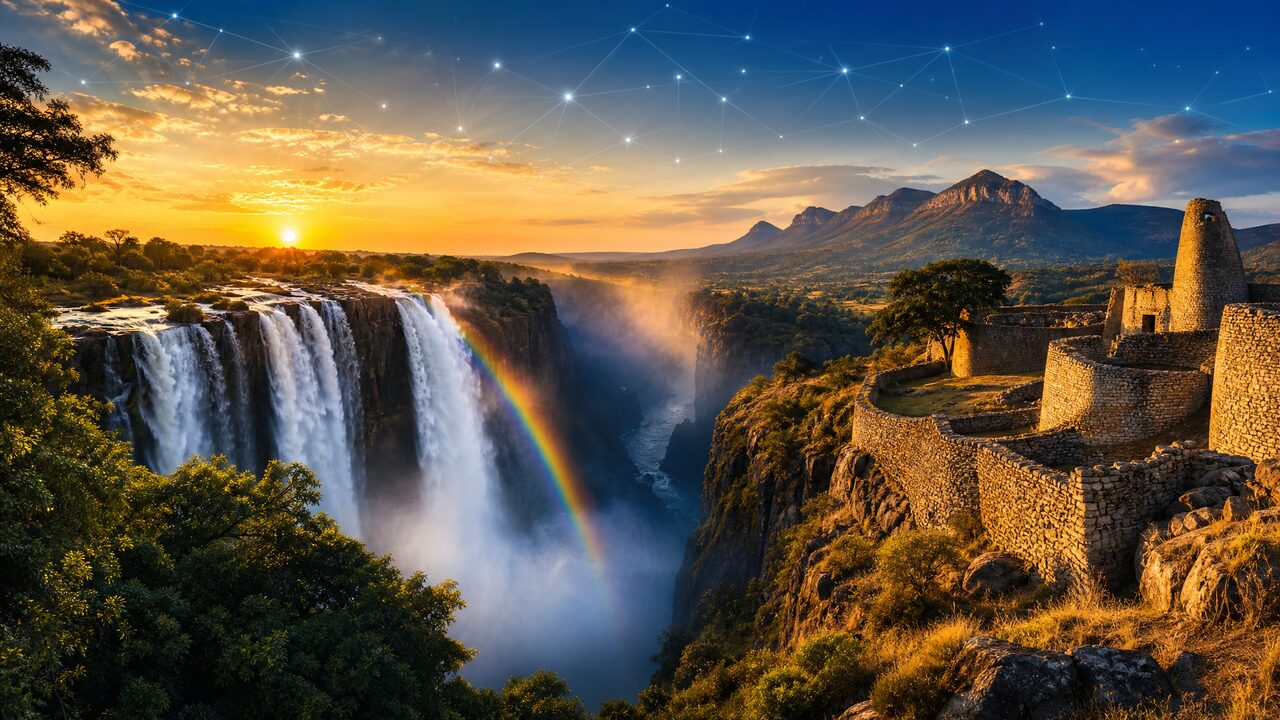
SEO for Tourism in Zimbabwe - Put Zimbabwe on the Digital Map
Zimbabwe has Victoria Falls, the Big Five, Great Zimbabwe, the Eastern Highlands and some of the finest wilderness on the continent. What it often lacks is the digital visibility to match.
Zimbabwe has one of the most compelling tourism offerings on the African continent. Victoria Falls, Hwange, Mana Pools, the Eastern Highlands, Great Zimbabwe, Lake Kariba, Matobo Hills — the list of world-class attractions is long and genuine. Yet when an international traveller sits down to plan an African trip, Zimbabwe often does not appear in the first set of search results. Kenya, Tanzania, South Africa and Botswana dominate, not because their offerings are better, but because their digital presence is stronger.
That gap is an opportunity. This guide is for every tourism business in Zimbabwe — activity providers, adventure companies, cultural tourism operators, transfer services, destination marketers and tourism associations — who wants to close it.
Discuss SEO for Your Tourism Business
Want international travellers to find your experience on Google? Speak to Craig Riley directly.
Zimbabwe's Visibility Problem Is a Content Problem
When someone searches "best safari destinations in Africa", Google returns pages from Kenyan and South African tourism boards, major international travel publishers, and well-funded OTAs. Zimbabwe rarely features on page one for these broad terms, not because the destination is weak but because the content representing it online is thin, scattered and often outdated.
Individual businesses face the same challenge at a smaller scale. A white water rafting company at Victoria Falls might have a decent website, but if it does not have a page specifically answering "Victoria Falls white water rafting prices" or "best time for rafting at Victoria Falls", it will lose those searches to an OTA listing or a travel blog written by someone who visited once.
The fix is not complicated, but it requires discipline: create detailed, authentic, locally-authoritative content for every experience, destination and question a traveller might search for. This is foundational SEO strategy applied to the tourism context.
The Searches That Bring Visitors to Zimbabwe
Understanding what travellers actually type into Google is the starting point for any tourism SEO strategy. The searches fall into distinct categories:
- Destination research — "is Zimbabwe safe for tourists", "best time to visit Zimbabwe", "Zimbabwe vs Botswana for safari"
- Activity planning — "Victoria Falls bungee jumping", "white water rafting Zambezi", "helicopter flight over Victoria Falls"
- Cultural and heritage — "Great Zimbabwe ruins history", "Matobo Hills rock paintings", "traditional Zimbabwean village tour"
- Practical logistics — "Zimbabwe visa on arrival", "how to get from Harare to Victoria Falls", "Victoria Falls airport transfers"
- Itinerary building — "10 day Zimbabwe itinerary", "things to do in Victoria Falls for 3 days", "Zimbabwe and Botswana combined trip"
Every one of these searches is a person actively considering Zimbabwe. The tourism businesses that answer these questions with clear, honest, detailed content are the ones that capture those visitors.
Build a Page for Every Experience You Offer
The biggest mistake tourism businesses make is cramming everything onto one or two pages. A rafting company, a helicopter tour operator, a cultural guide — each needs a dedicated page for every distinct experience they sell.
For a Victoria Falls activity company, that might mean separate pages for:
- Bungee jumping at Victoria Falls Bridge — what to expect, height, age and weight limits, pricing, booking process
- White water rafting on the Zambezi — rapids grading, full-day vs half-day, best season, what to bring
- Helicopter flights over Victoria Falls — duration, what you see, photo tips, booking windows
- Sunset cruise on the Zambezi — what is included, wildlife sightings, dress code, departure times
- Walking with lions / elephant encounters — ethical considerations, what the experience involves, age limits
Each page answers a specific search, builds trust through detail, and gives the traveller a clear path to book. A single "Our Activities" page with five bullet points simply cannot compete with this depth.
The Safety Question: Address It Head-On
"Is Zimbabwe safe for tourists?" is one of the most searched questions about the country. Every tourism business in Zimbabwe should have content that addresses this question directly, honestly and reassuringly.
The answer, for the tourism areas that visitors actually go to, is overwhelmingly positive. Victoria Falls, Hwange, Mana Pools, the Eastern Highlands and Harare's tourism infrastructure are well-established and welcoming. But if Zimbabwean businesses do not answer this question, international travel blogs and news outlets will, and their answers are often based on headlines rather than ground-level reality.
A well-written safety and practical information page on your own website does two things: it captures a high-volume search, and it reassures the very travellers you want to convert. Honesty and practical advice work far better than glossing over concerns.
Visual Content Is Zimbabwe's Greatest SEO Asset
Few destinations photograph as well as Zimbabwe. The Falls, the wildlife, the landscapes, the sunsets — these images sell the destination before a single word is read. And they are a powerful SEO asset when used correctly.
- Use descriptive file names — "victoria-falls-rainbow-aerial-view.jpg" not "DSC_0847.jpg"
- Write detailed alt text — "Aerial view of Victoria Falls showing the main curtain of water with a rainbow in the spray, Zambezi River, Zimbabwe"
- Compress for web — balance quality with speed, especially for mobile visitors on variable connections
- Use video — short clips of experiences (rafting, game drives, helicopter flights) embedded on experience pages dramatically increase engagement
- Google Images traffic — a well-optimised image can rank in Google Images and bring visitors to your site who then explore further
Zimbabwe's tourism businesses often already have extraordinary photography. The gap is usually in how it is used online — unoptimised, oversized, poorly described. Fix that and you unlock a significant traffic channel.
Competing at the Destination Level
Individual businesses ranking well is important, but Zimbabwe as a destination also needs to show up when travellers are in the early "where should I go?" phase. This is where destination marketing comes in.
Tourism associations, regional tourism authorities and destination marketing organisations can amplify the entire industry by:
- Publishing comprehensive destination guides that rank for broad searches
- Creating comparison content — "Zimbabwe vs Botswana safari", "Victoria Falls vs Niagara Falls"
- Building event and seasonal content — "what to do in Zimbabwe in July", "Zimbabwe festivals and events 2026"
- Linking to member businesses from authoritative destination pages, boosting individual operators' SEO
When the destination is visible, individual businesses benefit. When individual businesses are visible, the destination benefits. The two feed each other.
Technical Foundations for Tourism Websites
Tourism websites need to perform well for visitors from across the world, on every device, often while those visitors are on the move.
- CDN delivery — serve content from locations close to your visitors, whether they are in London, Sydney or Johannesburg
- Mobile-first design — travellers browse on phones during evenings, lunch breaks and airport waits
- Fast image loading — lazy-load gallery images, use modern formats, resize for the screen
- HTTPS — non-negotiable for any site handling bookings or personal information
- Structured data — TouristAttraction, TouristTrip, Event and FAQ schema help Google display rich results
- Multi-currency clarity — display prices in USD (the standard for Zimbabwe tourism) with clear indication
A beautiful website that loads slowly over a mobile connection in Munich is a website that loses bookings. If yours needs work, start with a solid website foundation before investing in content and rankings.
AI Search: The New Travel Agent
A growing number of travellers now use AI tools as their starting point. They ask ChatGPT to "plan a 10-day Zimbabwe trip for two adventurous adults" or ask Google's AI Overview "what are the must-do activities at Victoria Falls?"
These AI systems do not make things up from nothing. They draw on the content they have indexed, and they favour clear, well-structured, authoritative sources. Tourism businesses with detailed experience pages, strong reviews and factual destination content are the ones these AI tools cite by name.
This is a new frontier for Zimbabwe tourism, and it is where AI Search Optimization (AEO & GEO) becomes critical. The businesses and destinations that prepare their content for AI discovery now will capture an outsized share of bookings as AI-assisted travel planning becomes the norm.
Measuring Tourism SEO Success
For a tourism business, SEO success should be measured against real commercial outcomes, not vanity metrics:
- Booking enquiries and reservations from organic search
- Rankings for your target experience, destination and practical keywords
- Which experience pages generate the most valuable traffic
- International traffic share — are you reaching travellers in your key source markets?
- Google Business Profile performance — impressions, clicks, calls, website visits
- Content engagement — are destination guides keeping visitors on site long enough to convert?
A page that brings 50 visitors a month from the UK and converts three of them into bookings is far more valuable than one with thousands of visits and no enquiries. Focus on quality over quantity.
📌 Key Takeaways
- ✓Zimbabwe's tourism product is world-class — its digital visibility is not, and that gap is an opportunity
- ✓Every experience, activity and destination needs its own dedicated, detailed page
- ✓Address the safety question head-on with honest, reassuring, practical content
- ✓Zimbabwe's extraordinary photography is an untapped SEO asset when properly optimised
- ✓Local operators can out-content larger destinations through authenticity and depth
- ✓AI search tools are the new travel agents — structure your content to be recommended
- ✓Measure success by bookings and enquiries from your key source markets, not raw traffic
Frequently Asked Questions About SEO for Tourism in Zimbabwe
Why does the Zimbabwe tourism industry need SEO?
Zimbabwe competes for international visitors against better-known destinations like Kenya, South Africa and Botswana. SEO is how individual tourism businesses and the destination as a whole become visible when travellers are deciding where to go. Thousands of searches related to Zimbabwe tourism happen every month, and each one is an opportunity to win a visitor.
What types of tourism businesses benefit most from SEO?
Any business that depends on travellers finding them online. Activity companies (bungee, rafting, helicopter flights), cultural tourism operators, wildlife experience providers, transfer companies, destination marketing organisations and tourism associations all benefit. If travellers need to find you to book you, SEO matters.
How much does SEO cost for a tourism business in Zimbabwe?
Typically $200 to $1,500 per month depending on scope. A single-activity provider targeting one destination sits at the lower end, while a multi-destination brand competing internationally invests more. Because tourism transactions are high-value, even a small number of additional bookings covers the investment many times over.
How can Zimbabwe compete with bigger destinations online?
Zimbabwe cannot outspend Kenya or South Africa, but it can out-content them. Authentic, detailed, locally-written content about specific experiences, honest practical information and rich visual media create the kind of content search engines and AI tools reward. Zimbabwe has extraordinary stories — the gap is usually in the telling, not the substance.
How does AI search affect Zimbabwe tourism?
Travellers increasingly ask ChatGPT and Google AI to plan trips and recommend activities. These tools draw on the clearest, best-structured content available. Tourism businesses with detailed experience pages, strong reviews and well-organised information are the ones AI systems confidently recommend. Optimising for AI discovery now positions Zimbabwean businesses to capture a growing share of bookings.
CDR Take Away
Zimbabwe does not have a tourism product problem. It has a visibility problem. The Falls are as spectacular as they have ever been, the wildlife is thriving, and the hospitality is genuinely warm. What is missing, for too many tourism businesses, is the digital presence that puts them in front of the right traveller at the right moment.
Closing that gap does not require a massive budget. It requires clarity, consistency and content that does justice to what Zimbabwe actually offers. The businesses that invest in this now will be the ones shaping Zimbabwe's tourism story for the next decade. If you would like a straightforward assessment of where your tourism business stands in search, get in touch and we can talk it through.
Does AI recommend your business?
Find out in seconds with our free AI Visibility Checker. See whether ChatGPT and other AI assistants mention your business when customers ask — no sign-up, instant results.

About the Author
Craig RileyDigital marketing specialist with 15+ years of experience in SEO, web design, and app development. Based in Bulawayo, Zimbabwe. Also Head Coach of Water Polo at CBC Bulawayo.
Ready to Grow Your Business?
Get in touch with Craig today and let's discuss how we can help your business dominate online.