
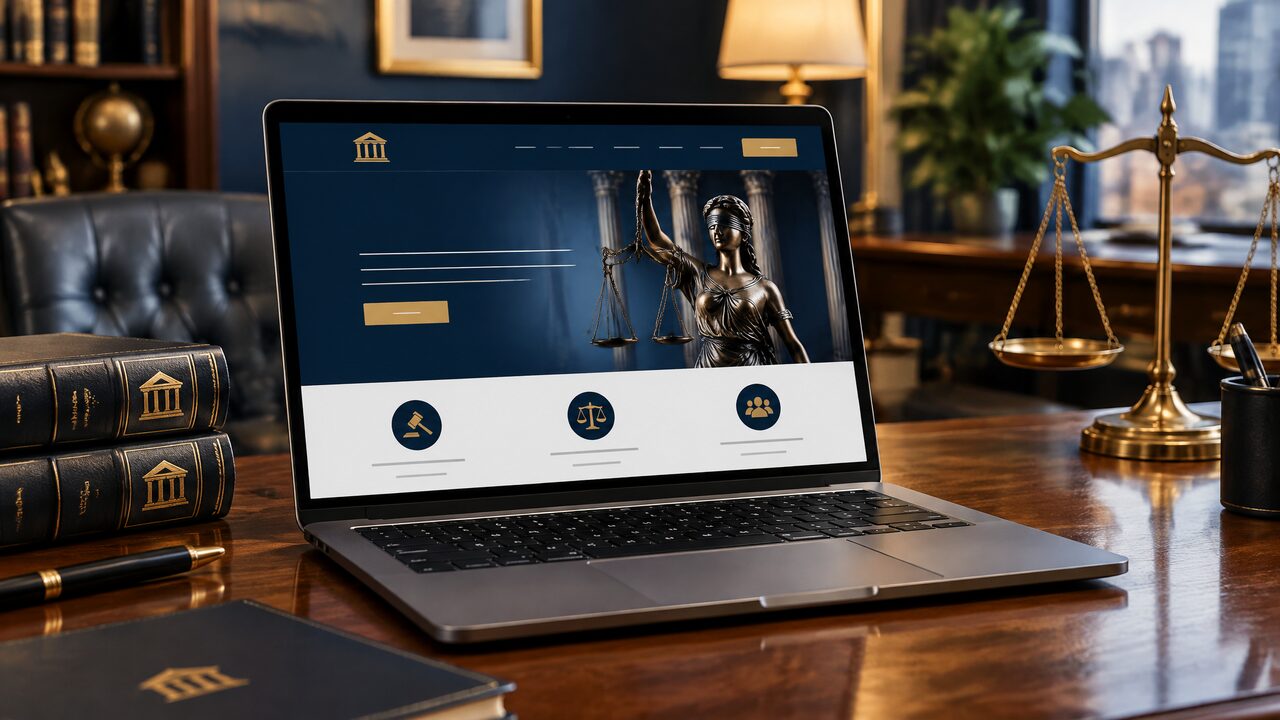
Before a prospective client ever calls your firm, they judge it by your website. In a profession built entirely on trust, the site you put in front of them is doing quiet work every hour of the day.
A man in Harare has been referred to your firm by a colleague. Before he phones, he does what almost everyone does now: he types your firm's name into Google and clicks through to your website. In the next ten seconds he decides, largely without realising it, whether you look like a firm he can trust with something that matters. That judgement happens before he has spoken to a single person at your practice.
For a law firm, the website is not a brochure. It is the first meeting. This guide looks at what actually makes a law firm website work in Zimbabwe, written for practitioners rather than as generic design advice with the word "lawyer" dropped in.
Discuss a Website for Your Law Firm
Want a site that reflects the standing of your practice and brings in the right clients? Speak to Craig Riley directly.
Your Website Is the First Impression, Not the Second
Lawyers often assume the first impression happens in the consultation room. It does not. By the time a client sits across from you, they have already read your site, formed a view and decided you are worth the appointment. Everything the website communicates, deliberately or by accident, shapes the mindset they walk in with.
A cramped, dated or slow site suggests a firm that is behind the times. A clean, calm, well-organised site suggests a firm that is careful, current and in control of the details. For a client about to hand over a divorce, a property transfer or a business dispute, those signals matter enormously. Good design is not decoration here. It is reassurance.
Design That Signals Trust and Authority
Legal clients are rarely looking for flashy. They are looking for competence and stability. The design choices that convey that are quieter than most people expect:
- A restrained, professional palette and generous white space, so the site feels considered rather than cluttered
- Clear, readable typography that respects the seriousness of the subject matter
- Real photography of your offices, your team and your city rather than obvious stock images of gavels and handshakes
- A consistent, dignified tone across every page that matches how you would speak to a client in person
The same discipline that makes a strong legal argument, clarity, structure and no wasted words, is exactly what makes a strong law firm website. Our wider web design service is built on that principle.
A Page for Every Practice Area
The single biggest structural mistake law firm websites make is squeezing every service onto one page that reads "we offer a range of legal services" followed by a list. That page speaks to nobody in particular, and it gives a worried client nowhere to land that feels written for them.
Build a dedicated page for each area you want to be known for. For a typical Zimbabwean firm that means separate, properly written pages for:
- Conveyancing and property transfers
- Family law, covering divorce, custody and maintenance
- Commercial and corporate law, including company registration and contracts
- Labour and employment law
- Deceased estates and wills
- Civil litigation and debt recovery
Each page should explain the process in plain language, answer the questions clients are nervous to ask, and make it easy to get in touch. These pages also happen to be what search engines reward, which is why they sit at the heart of our SEO work for law firms too. Design and findability pull in the same direction.
Practitioner Profiles That Do the Work
People do not hire firms. They hire the person they will be dealing with. Yet many law firm sites reduce their attorneys to a name and a job title, or leave them off entirely.
A proper profile for each practitioner is one of the most persuasive elements on the whole site. Give every attorney a professional photo, their year of admission, the university they trained at, their areas of practice and a short, human paragraph about how they work. This does two things at once: it reassures the client that a real, qualified person is behind the matter, and it strengthens the credibility signals that both Google and prospective clients weigh up. It is the same reason I keep a detailed profile of my own work visible.
Built for the Phone First
Most Zimbabweans will reach your site on a mobile phone, frequently on mobile data over Econet or NetOne and sometimes on a shaky connection. If your website is designed for a desktop and merely tolerated on a phone, you are letting down the majority of your visitors at the exact moment they need help.
- Pages that load quickly, with compressed images and lean code, even on slower connections
- Text that is comfortable to read on a small screen without pinching and zooming
- A phone number that a client can tap to call instantly, and a visible WhatsApp option
- Contact details and a clear next step never more than a tap away
A client in distress should be able to reach you from their phone in seconds. That is a design decision, and it is one of the most valuable ones you will make.
Security and the "Not Secure" Warning
For a profession built on confidentiality, there is no faster way to lose a client's confidence than a browser flashing a "Not Secure" warning over your web address. Every law firm site needs a valid SSL certificate as a bare minimum, so every visitor sees the padlock and knows their connection is protected.
Beyond the certificate, a well-built site keeps its software current, protects any contact or intake forms, and is hosted somewhere reliable so it does not vanish when a client goes looking for you. These are not glamorous details, but they are the digital equivalent of a locked filing cabinet.
Turning Visitors Into Enquiries
A beautiful website that does not lead anywhere is a wasted opportunity. The purpose of the site is to turn an anxious visitor into a confident enquiry, and that requires gentle, obvious guidance at every step.
- A clear call to action on every page, whether that is a phone number, a WhatsApp link or a short contact form
- A simple enquiry form that asks only for what you genuinely need, so it does not feel like an interrogation
- Reassurance near the point of contact, for example a note that enquiries are confidential and handled promptly
- An office address and map, so an in-person firm feels real and reachable
The goal is that a client never has to hunt for how to take the next step. It should be the easiest thing on the page.
A Foundation Your Rankings Can Build On
There is little point pouring effort into being found on Google if the site people land on is slow, confusing or untrustworthy. Web design and search visibility are two halves of the same job. A fast, well-structured, mobile-friendly site gives every future SEO campaign something solid to work with, while a weak site quietly caps how well you can ever rank.
Get the foundation right first, and everything you do afterwards to attract clients works harder. That is why I always recommend firms treat the website as the groundwork, not an afterthought.
📌 Key Takeaways
- ✓Your website is the first meeting, and it forms a trust judgement before anyone calls
- ✓Restrained, professional design signals competence better than flashy visuals
- ✓Build a dedicated page for every practice area you want to be known for
- ✓Real practitioner profiles are among the most persuasive elements on the site
- ✓Design mobile-first, because most Zimbabwean clients arrive on a phone
- ✓An SSL certificate and secure hosting are non-negotiable for a confidential profession
- ✓Make the next step effortless, so a visitor becomes an enquiry
Frequently Asked Questions About Web Design for Law Firms in Zimbabwe
How much does a law firm website cost in Zimbabwe?
Roughly $300 for a simple credibility site up to $3,000 or more for a larger firm with many practice-area pages, practitioner profiles and custom features. The right figure depends on the number of pages and how much bespoke design you need. Because a single new instruction often covers the cost several times over, most firms treat it as an investment.
What pages does a law firm website actually need?
At a minimum a clear home page, an about page with real practitioner profiles, a dedicated page for each practice area, a credentials page and an easy contact page with a map and tappable phone number. The practice-area pages do most of the work, because they match what clients search for and speak to each situation directly.
Is it worth having a website if my firm gets work through referrals?
Yes. Even referred clients look you up before they call. A dated or missing site quietly undermines the referral, while a professional one confirms the recommendation and reassures the client before the first meeting. Your website is often the second impression that decides whether a warm referral becomes an instruction.
How long does it take to build a law firm website?
Usually three to six weeks from brief to launch, depending on how many practice-area pages are involved and how quickly content, bios and photos are supplied. Larger firms with many attorneys take a little longer. The biggest factor is normally how fast the firm can review drafts and provide practitioner details.
Will my law firm website work well on a phone?
It must. Most people in Zimbabwe find and read your site on a mobile phone, often on mobile data with a variable connection. Every firm site we build is designed mobile-first, so it loads quickly, reads clearly on a small screen and makes calling or messaging effortless. A site that only works on desktop is losing the majority of visitors.
CDR Take Away
Legal work is won on trust, and for most clients that trust now begins on your website. A calm, professional, fast-loading site with proper practice-area pages and real practitioner profiles does quiet, persuasive work every hour of the day, confirming referrals, answering questions and turning worried visitors into confident enquiries.
If your firm's current site is dated, slow or simply not pulling its weight, it is costing you clients you never even hear about. If you would like a straightforward look at where yours stands and what it would take to fix, get in touch and we can talk it through.
Does AI recommend your business?
Find out in seconds with our free AI Visibility Checker. See whether ChatGPT and other AI assistants mention your business when customers ask — no sign-up, instant results.

About the Author
Craig RileyDigital marketing specialist with 15+ years of experience in SEO, web design, and app development. Based in Bulawayo, Zimbabwe. Also Head Coach of Water Polo at CBC Bulawayo.
Ready to Grow Your Business?
Get in touch with Craig today and let's discuss how we can help your business dominate online.