Two Acronyms, One Big Shift
In my last AI Talk post I introduced Answer Engine Optimization (AEO). Today I want to tackle a question I get asked almost every week now: "What's the difference between GEO and SEO, and which one should my business be doing?" It's a fair question, because the terminology is genuinely confusing, and there's a lot of hype out there. So let me cut through the noise and give you a clear, practical explanation — the way I'd explain it to a client across my desk in Bulawayo.
GEO stands for Generative Engine Optimization. SEO, as most business owners now know, stands for Search Engine Optimization. They sound similar, they share DNA, but they're optimising for two different worlds — and understanding the distinction will help you spend your marketing budget wisely.
Key Takeaways
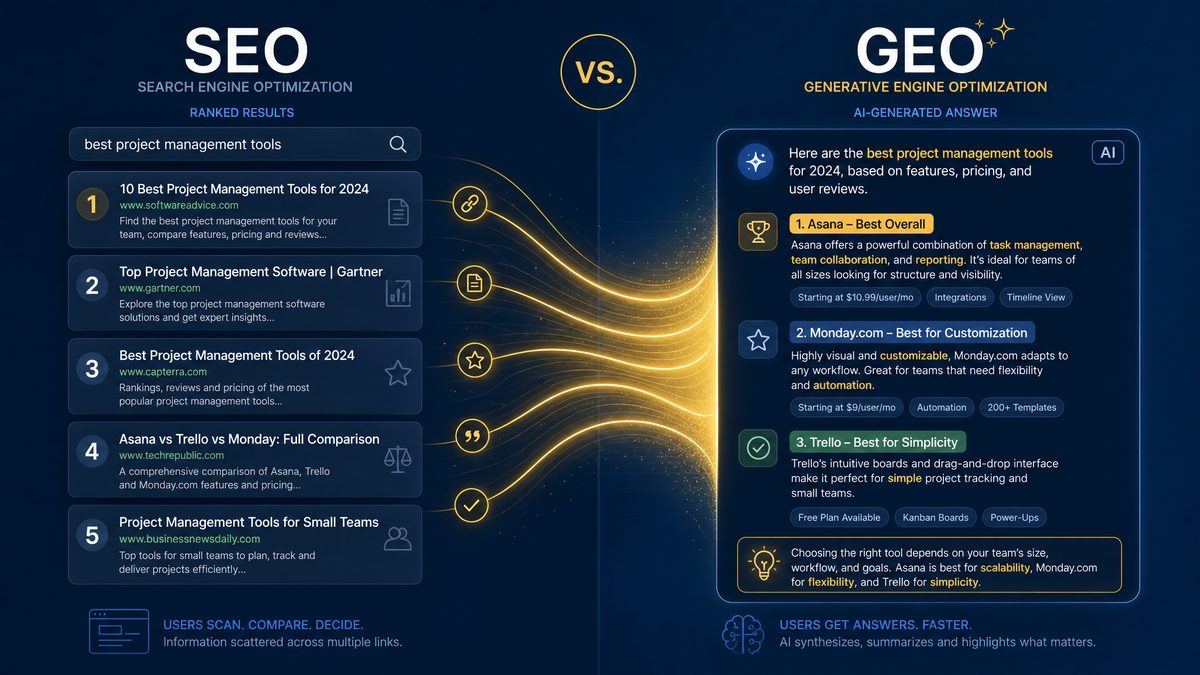
- SEO optimises for ranking in traditional search results (the list of links).
- GEO optimises for how generative AI tools represent, summarise and recommend your brand.
- They share foundations — quality content, authority and trust — but differ in how success is measured.
- You shouldn't choose one over the other; the smart play is to do both together.
- Zimbabwe businesses that combine SEO and GEO now will dominate visibility as AI search grows.
What SEO Has Always Been About
Let's start with familiar ground. Search Engine Optimization is the practice of improving your website so it ranks higher in Google's organic results. When someone searches "accountant Harare", SEO is what determines whether your website appears at the top of that list or buried on page three. It's about keywords, technical health, quality content, backlinks and local signals — all working together to earn Google's trust.
SEO has been the backbone of digital marketing for two decades, and it's not going anywhere. People still type queries into Google every single day, and ranking well still drives enormous value. If your SEO foundations are weak, fix those first — you can read more about how we approach it on our SEO services page.
What GEO Is About
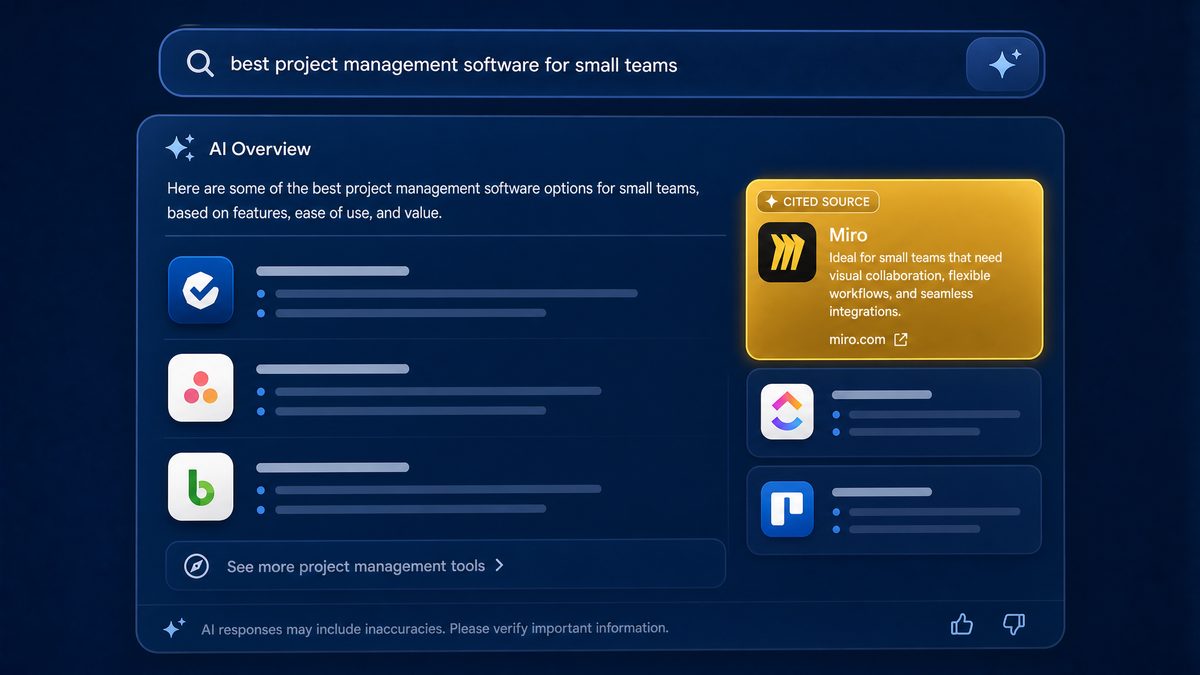
Generative Engine Optimization is about influencing how generative AI tools — ChatGPT, Google's Gemini, Microsoft Copilot, Perplexity and others — describe, summarise and recommend your business when they generate an answer. Instead of optimising for a position in a list, you're optimising for inclusion and favourable representation inside an AI-generated response.
Here's a concrete example. Imagine someone asks Gemini, "What's the best digital marketing agency in Zimbabwe for a small business?" GEO is the work that influences whether your agency is named, how accurately it's described, and whether the AI frames you as a strong fit. It's a subtle but powerful shift — from being found to being recommended.
GEO vs SEO: The Key Differences
Here's the comparison at a glance before we dig into the detail:
| Factor | SEO | GEO |
|---|---|---|
| Optimises for | Ranking in search results | How AI represents and recommends you |
| Success looks like | Higher rankings and organic traffic | Being mentioned accurately by AI |
| Main signals | Keywords, backlinks, technical health | Clarity, authority, consistent info |
| How people find you | They click through to your website | AI summarises you inside its answer |
| Best for | Capturing active searchers | Staying visible as AI search grows |
What you're optimising for
SEO optimises for rankings — a measurable position in a results page. GEO optimises for representation — whether and how an AI mentions you. One is about placement; the other is about narrative.
How success is measured
With SEO, you track rankings, organic traffic and click-through rates. With GEO, you're tracking whether AI tools mention your brand, whether the information they give is accurate, and the sentiment of how you're described. It's a newer, fuzzier kind of measurement — which is exactly why our AI visibility checker exists, to give you a clearer picture.
The role of citations and sources
Tools like Perplexity and Google AI Overviews cite their sources. GEO involves making sure your content is the kind of clear, authoritative material these tools want to cite. SEO backlinks build authority for Google; GEO citations build authority within AI answers.
How the content is consumed
With SEO, a human eventually clicks through to your website. With GEO, the AI may summarise your information without the user ever visiting your site — which makes how you're represented in that summary absolutely critical.
What GEO and SEO Have in Common
Despite the differences, I want to stress how much these two share — because this is where the good news lies. Both reward genuinely helpful, well-structured content. Both depend on authority and trust. Both benefit from consistent business information and real expertise. The work you put into one very often strengthens the other.
This is why I never frame it as GEO versus SEO when I'm advising clients. The honest answer to "which should I do?" is almost always "both" — because they reinforce each other. A strong SEO foundation makes GEO easier, and GEO-friendly content tends to perform well in traditional search too.
How Zimbabwe Businesses Should Approach This
Here's the practical path I recommend for a typical Zimbabwe SME.
Step 1: Get your SEO foundations solid
If your website is slow, poorly structured, or invisible in Google, fix that first. There's no point optimising for AI if your basic digital house isn't in order. Strong local SEO is especially important here.
Step 2: Structure content to be AI-friendly
Write clear answers to real questions, use logical headings, and make your expertise obvious. This serves both GEO and AEO simultaneously.
Step 3: Build and maintain consistent authority
Keep your business details consistent across the web, collect genuine reviews, and publish content that demonstrates real knowledge of your field and your local market.
Step 4: Monitor how AI sees you
Regularly check how AI tools describe your brand and correct inaccuracies where you can. This is an ongoing discipline, not a one-time task.
Frequently Asked Questions About GEO vs SEO
Should I stop doing SEO and switch to GEO?
No. That would be a mistake. People still use traditional search heavily, and SEO drives real traffic and revenue today. GEO is an addition to your strategy, not a replacement for SEO. The strongest approach combines both.
Is GEO the same as AEO?
They overlap closely. AEO focuses specifically on being the direct answer to a question, while GEO is broader — covering how generative AI represents and recommends your brand across many contexts. In practice, the same content work supports both.
How do I know if GEO is working?
You measure whether AI tools mention your brand, how accurately they describe you, and the sentiment of those mentions. Our AI visibility checker is designed to give Zimbabwe businesses exactly this insight.
Is GEO worth it for a small business in Zimbabwe?
Yes — and possibly more so than for big corporations, because so few local businesses are doing it. Early movers can establish themselves as the trusted, cited source in their niche while competitors are still focused only on traditional search.
The Bottom Line
GEO and SEO aren't rivals — they're partners in the same goal: making sure your business is visible, trusted and recommended wherever your customers are searching. SEO keeps you winning in traditional Google results. GEO keeps you relevant as more people turn to AI assistants for answers. Do both, and you cover all your bases.
If you'd like help building a combined strategy, that's exactly what we do at CDR. Explore our AI search optimisation services, run a free check with our AI visibility checker, or reach out and let's talk about your business specifically.