The Circuit Before Your Elution Column Matters Just as Much
Most discussions about gold recovery focus on the elution process — how you strip gold from loaded carbon. But the adsorption circuit that feeds your elution column determines how much gold reaches the carbon in the first place. Get this wrong, and no amount of elution optimisation will save your recovery rate.
The two dominant methods — Carbon-in-Pulp (CIP) and Carbon-in-Leach (CIL) — are both widely used in Zimbabwe, from artisanal operations processing 20 tonnes per day to established mines handling hundreds. Here is a practical comparison to help you choose.
- CIP separates leaching and adsorption into two stages — simpler but uses more tanks
- CIL combines leaching and adsorption simultaneously — fewer tanks, faster overall
- CIL is better for ores with preg-robbing characteristics
- CIP gives more control over leach conditions
- Both feed into the same elution and electrowinning circuits downstream
How CIP (Carbon-in-Pulp) Works
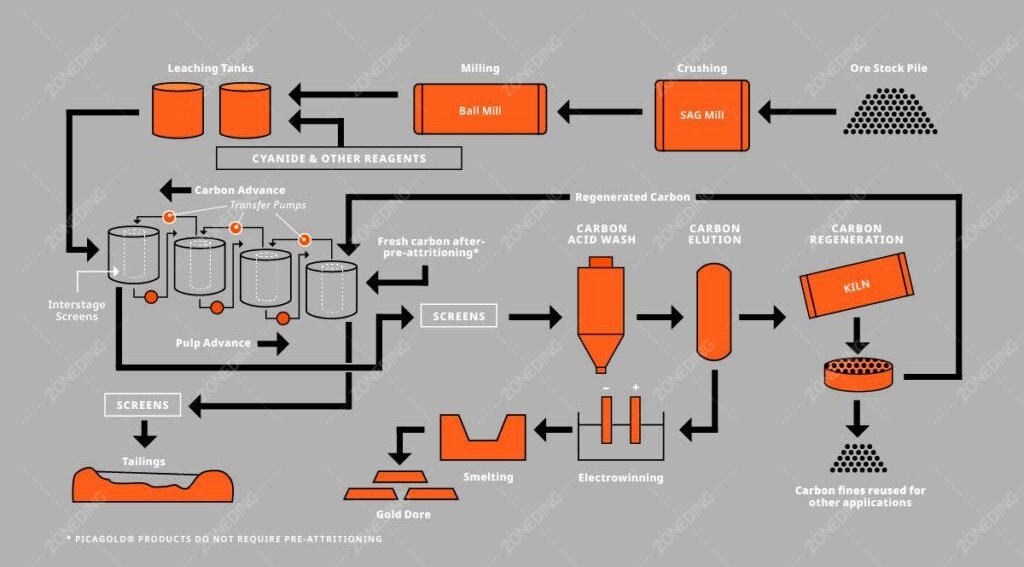
In a CIP circuit, the ore is first ground and leached with cyanide in a series of leach tanks. The dissolved gold in the pregnant solution then moves to separate adsorption tanks where activated carbon is added to capture the gold. The two stages — leaching and adsorption — happen sequentially.
CIP Advantages
- Separate leach and adsorption stages allow independent optimisation of each
- Easier to control cyanide concentration during leaching
- Better suited for ores that leach slowly — you can extend leach time without affecting carbon residence time
- Simpler operator understanding — each stage has clear, measurable parameters
How CIL (Carbon-in-Leach) Works
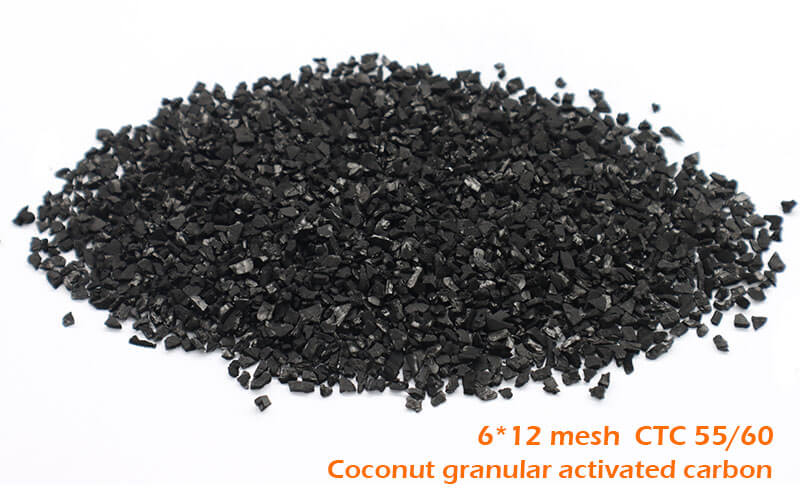
In a CIL circuit, activated carbon is added directly to the leach tanks. Leaching and adsorption happen simultaneously — as gold dissolves from the ore into solution, the carbon immediately captures it. This dual action typically requires fewer tanks and less floor space.
CIL Advantages
- Combined process means fewer tanks and smaller plant footprint
- Critical for preg-robbing ores — carbon competes with natural carbonaceous material in the ore, preventing gold loss
- Generally higher overall recovery for certain ore types
- Shorter total processing time from ore to loaded carbon
CIP vs CIL: Side-by-Side Comparison
| Parameter | CIP | CIL |
|---|---|---|
| Leach and adsorption | Sequential (separate) | Simultaneous |
| Number of tanks | More (leach + adsorption) | Fewer (combined) |
| Carbon consumption | Lower (carbon in clean solution) | Higher (carbon abrasion in pulp) |
| Gold recovery | 92–97% | 93–98% |
| Preg-robbing ore performance | Poor | Excellent |
| Operational complexity | Moderate | Moderate-High |
| Capital cost | Higher (more tanks) | Lower (fewer tanks) |
| Carbon attrition | Lower | Higher |
Which Circuit Suits Zimbabwe Small-Scale Mines?
For typical Zimbabwe small-scale gold operations (20–100 tonnes per day), I generally recommend CIL for these reasons:
- Lower capital cost: Fewer tanks means less steel, less concrete, and a smaller footprint — critical when capital is constrained.
- Many Zimbabwe ores contain carbonaceous material: Preg-robbing is a real issue in several mining districts. CIL handles this where CIP would suffer significant gold losses.
- Simpler plant layout: Less piping, fewer pumps, easier to maintain with limited engineering support.
That said, if your ore is clean (no preg-robbing) and you want maximum control over leach conditions, CIP gives you that flexibility. Some larger Zimbabwe operations use CIP successfully with excellent results.
The Downstream Connection
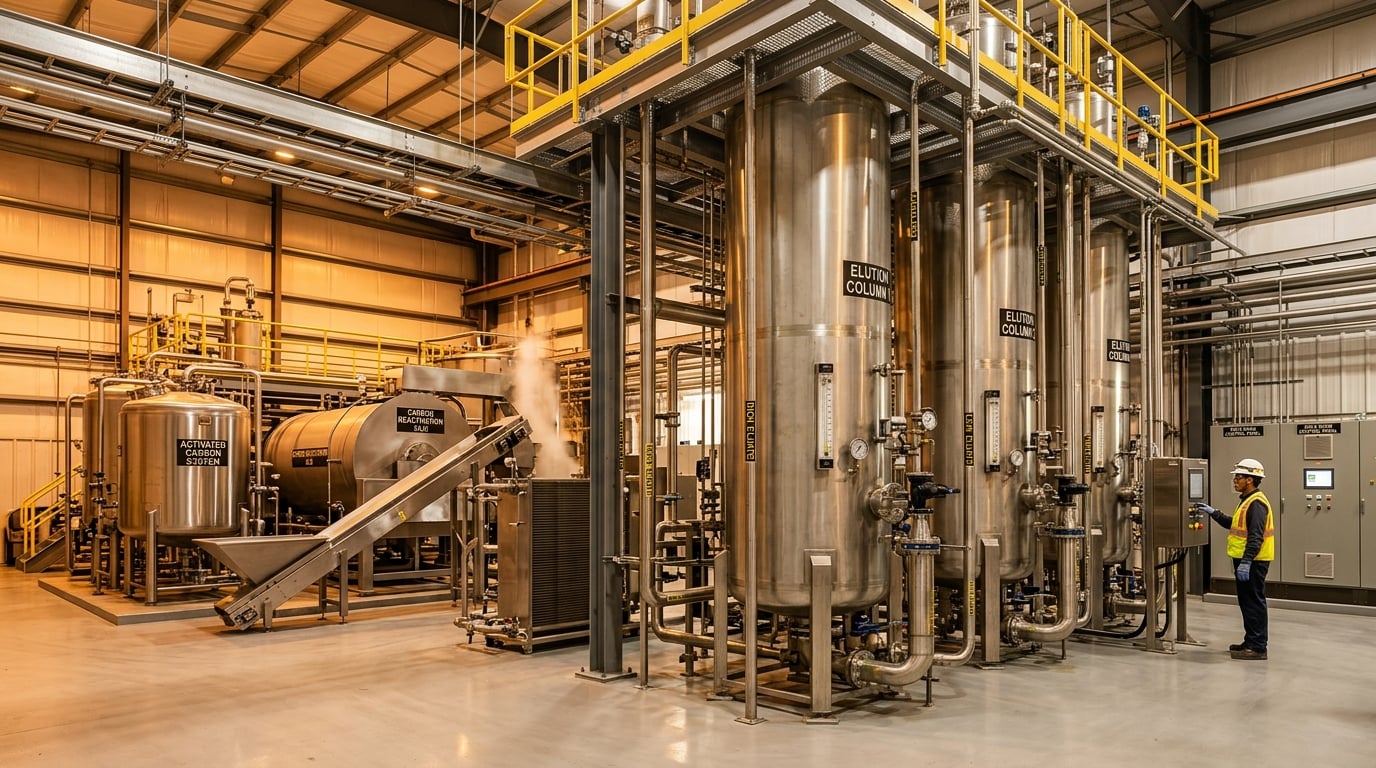
Whether you choose CIP or CIL, the loaded carbon from your adsorption circuit goes through the same downstream process: elution (AARL or Zadra), electrowinning and smelting. Proper carbon management — acid washing, regeneration and monitoring carbon activity — is equally critical regardless of which adsorption method you use.
Frequently Asked Questions
Can I convert a CIP plant to CIL?
In many cases, yes. The main change involves adding carbon to your existing leach tanks and installing carbon screening systems. It is a significant modification but far cheaper than building a new plant.
Which method uses more cyanide?
CIL can sometimes use slightly more cyanide because the carbon adsorbs cyanide along with the gold. However, the difference is usually modest, and the improved recovery often more than compensates for the additional reagent cost.
What happens to the loaded carbon?
Loaded carbon from either circuit is sent to the elution plant where gold is stripped using either the AARL or Zadra method, then recovered via electrowinning.
What gold recovery rate should I expect?
Both circuits can achieve 92–98% recovery with properly optimised conditions. If your recovery is consistently below 90%, the issue is likely with leach conditions, carbon activity, or elution circuit problems rather than the choice of CIP vs CIL.
Need help designing or optimising your adsorption circuit? Contact Craig Riley for practical, Zimbabwe-specific advice. I can also help you plan a complete plant from start to finish.