Why Every Serious Small-Scale Miner Needs Their Own Elution Plant
Too many small-scale gold miners in Zimbabwe sell their loaded carbon to third-party elution operators — often at 60–80% of the gold's actual value. That 20–40% discount is pure profit walking out the door. Setting up your own elution plant puts that value back in your pocket.
This guide walks you through the practical steps of establishing a small-scale elution facility — equipment, layout, licensing, costs and operational considerations specific to Zimbabwe. If you need a refresher on the underlying chemistry, start with my article on the gold elution process.
- A basic Zadra elution setup for 50–100 kg carbon batches costs $15,000–$40,000
- The Zadra method is recommended for small-scale due to simpler operation
- Essential components: elution column, boiler, acid wash tank, electrowinning cell, regeneration kiln
- Proper safety and environmental management are non-negotiable
- ROI is typically achieved within 3–6 months for active operations
Step 1: Choose Your Elution Method
For small-scale operations processing under 100 tonnes per day of ore, the Zadra method is almost always the better choice. It requires less capital, simpler equipment, no deionised water plant, and operators with less specialised training. The slightly lower stripping efficiency compared to AARL is more than offset by the operational simplicity and lower risk of costly mistakes.
Step 2: Essential Equipment
A functional small-scale Zadra elution plant requires:
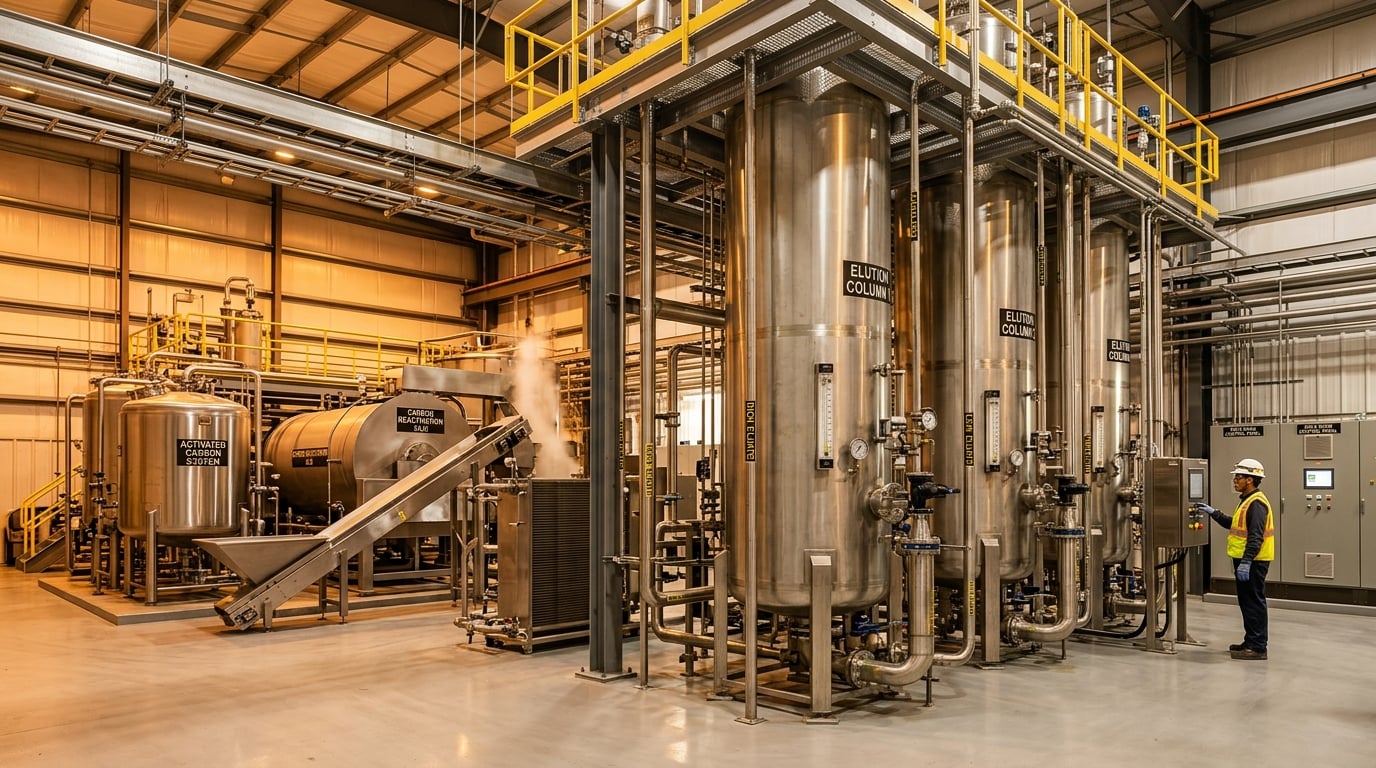
- Elution column: Stainless steel pressure vessel sized for your carbon batch (50–100 kg is typical for small-scale). Must include proper carbon retention screens and drainage.
- Boiler/heater: Capable of heating the eluant to 95–100°C. Electric, diesel or wood-fired — choose based on your energy situation and operating costs.
- Acid wash tank: For pre-treatment of loaded carbon with dilute HCl. Acid-resistant lining is essential.
- Electrowinning cell: Where gold is deposited from the pregnant eluate onto steel wool cathodes. Size depends on your throughput.
- Carbon regeneration kiln: Rotary kiln operating at 600–650°C to restore carbon activity after each elution cycle.
- Pumps, piping and valves: All must be compatible with caustic and acidic solutions. Do not cut corners here — a leak of hot caustic solution is a safety emergency.
- Water supply: Clean water for the eluant. Quantity depends on method, but plan for at least 2,000–3,000 litres per elution cycle.
Step 3: Plant Layout and Infrastructure
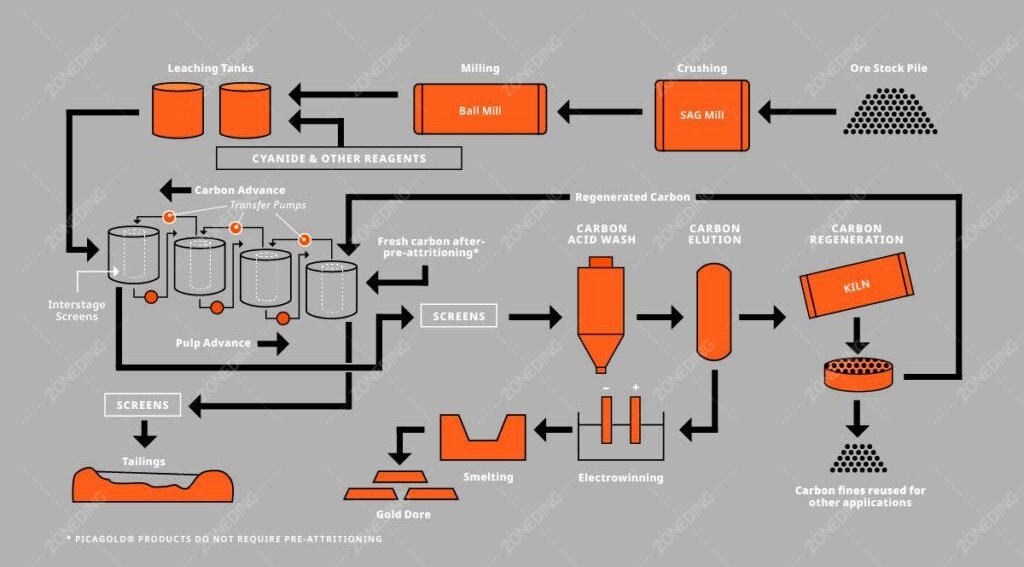
Layout matters more than most people realise. The flow should be logical: acid wash → elution column → electrowinning → carbon regeneration → back to the adsorption circuit. Minimise piping runs, ensure gravity flow where possible, and create containment bunds around all chemical handling areas.
You will also need secure storage for reagents (sodium cyanide, hydrochloric acid, caustic soda), a smelting area with proper ventilation, a locked gold room for product storage, and staff facilities including emergency showers and first aid stations.
Step 4: Licensing and Compliance
In Zimbabwe, operating an elution plant requires compliance with the Mines and Minerals Act. You will typically need:
- A valid mining claim or partnership with a claim holder
- Environmental Impact Assessment (EIA) approval from the Environmental Management Agency (EMA)
- Compliance with cyanide handling regulations
- Proper waste disposal permits
- Workers' compensation insurance
I strongly recommend engaging a qualified environmental consultant to handle the EIA process. Cutting corners on compliance creates legal liability that far outweighs the cost of doing it properly.
Step 5: Operational Best Practices
Once your plant is running, maintaining consistent performance requires:
- Strict carbon management protocols — regular acid washing, proper regeneration temperatures, and monitoring carbon activity
- Consistent reagent dosing — maintaining the correct NaOH and NaCN concentrations is critical for efficient stripping
- Temperature control — the elution column temperature must be maintained consistently throughout the cycle
- Regular equipment maintenance — especially pumps, seals and the regeneration kiln
- Detailed record-keeping — log every batch: carbon weight, gold loading, stripping efficiency, reagent consumption, and any problems encountered
Cost Estimates for Zimbabwe
Realistic budget ranges for a small-scale Zadra plant:
| Item | Estimated Cost (USD) |
|---|---|
| Elution column (stainless steel) | $3,000–$8,000 |
| Boiler/heater | $2,000–$5,000 |
| Acid wash system | $1,500–$3,000 |
| Electrowinning cell | $2,000–$6,000 |
| Regeneration kiln | $3,000–$8,000 |
| Piping, pumps, instrumentation | $2,000–$5,000 |
| Civil works and containment | $2,000–$5,000 |
| Total | $15,500–$40,000 |
These figures vary significantly based on whether you source equipment locally, import from South Africa, or purchase second-hand. For operations processing decent-grade ore, the payback period is typically 3–6 months.
Frequently Asked Questions
Can I start with a very small plant and upgrade later?
Yes. Many Zimbabwe operators start with a 30–50 kg carbon capacity plant and scale up as production increases. The key is building the foundation (containment, power supply, water) to accommodate future expansion.
What is the minimum gold production to justify an elution plant?
If you are processing at least 5–10 kg of loaded carbon per week, the economics strongly favour owning your own plant rather than selling loaded carbon to a toll processor.
Do I need a qualified metallurgist to run the plant?
A Zadra plant can be operated by trained technicians without formal metallurgical qualifications, but I strongly recommend having a metallurgical consultant involved in the setup, commissioning and initial training phases.
Planning an elution plant? Contact Craig Riley for practical, Zimbabwe-specific guidance from initial design through to commissioning. I also offer ongoing support for existing elution operations.